
PIKEVILLE, Tenn. (TNECD) — Nestled at the eastern edge of the Cumberland Plateau lies a community home to less than 2,000 people in a region of the state that’s geographically difficult to get to.
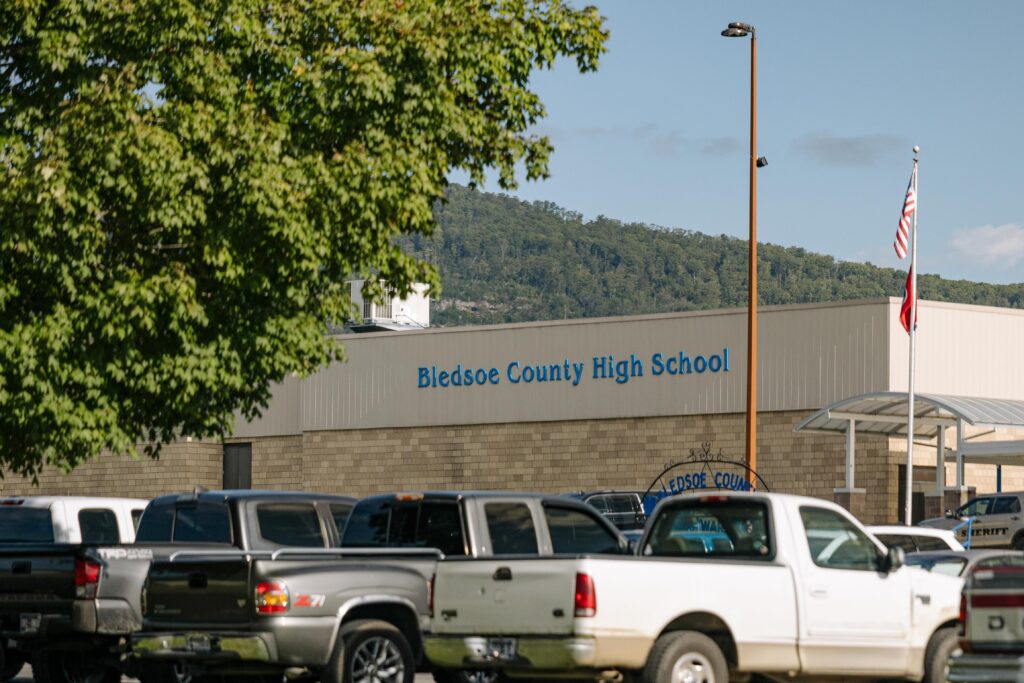
Yet, in Bledsoe County’s one small public high school, there’s a hum of excitement.
“This is going to be the future of it all,” Bledsoe County High School student Douglas Peters said.
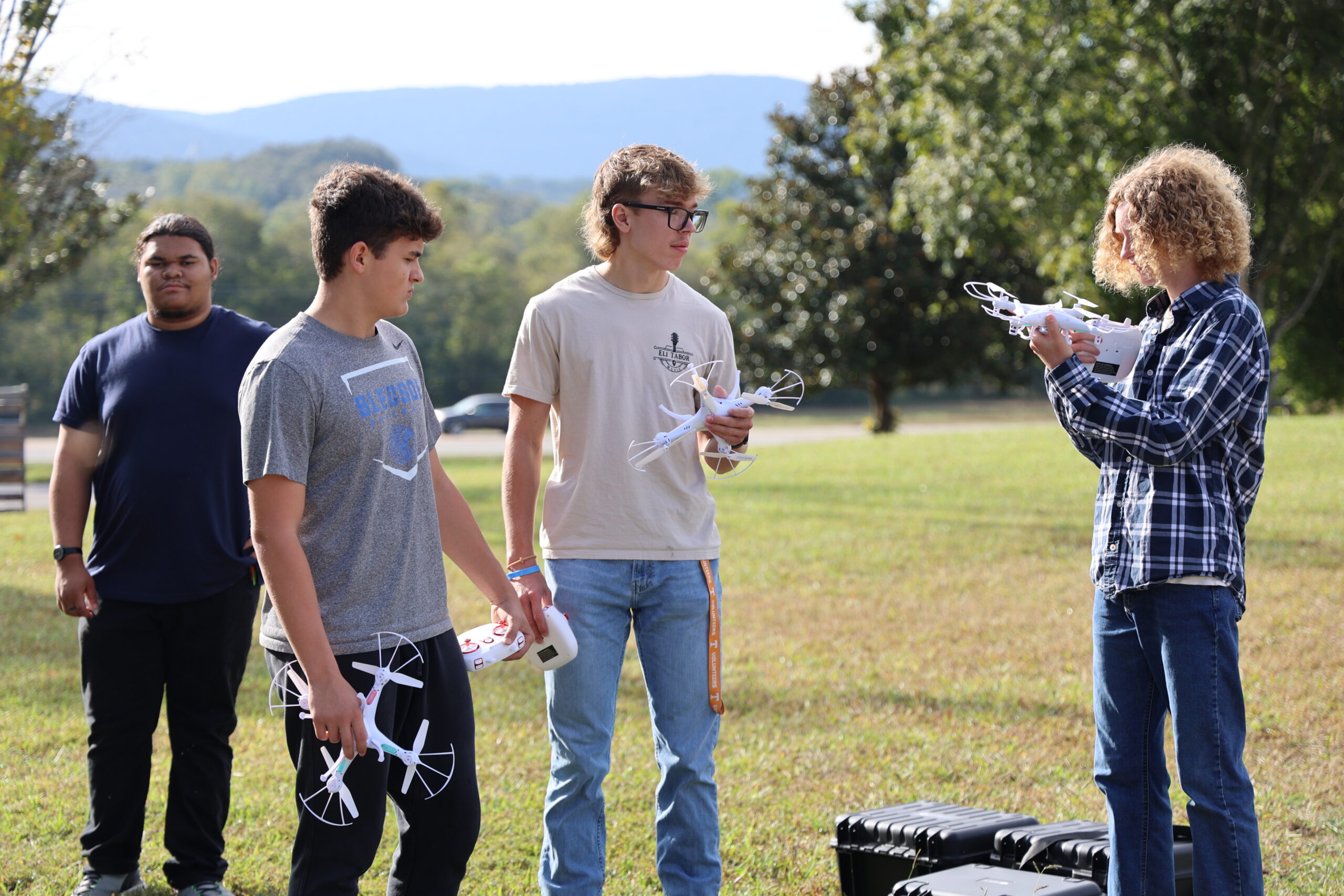
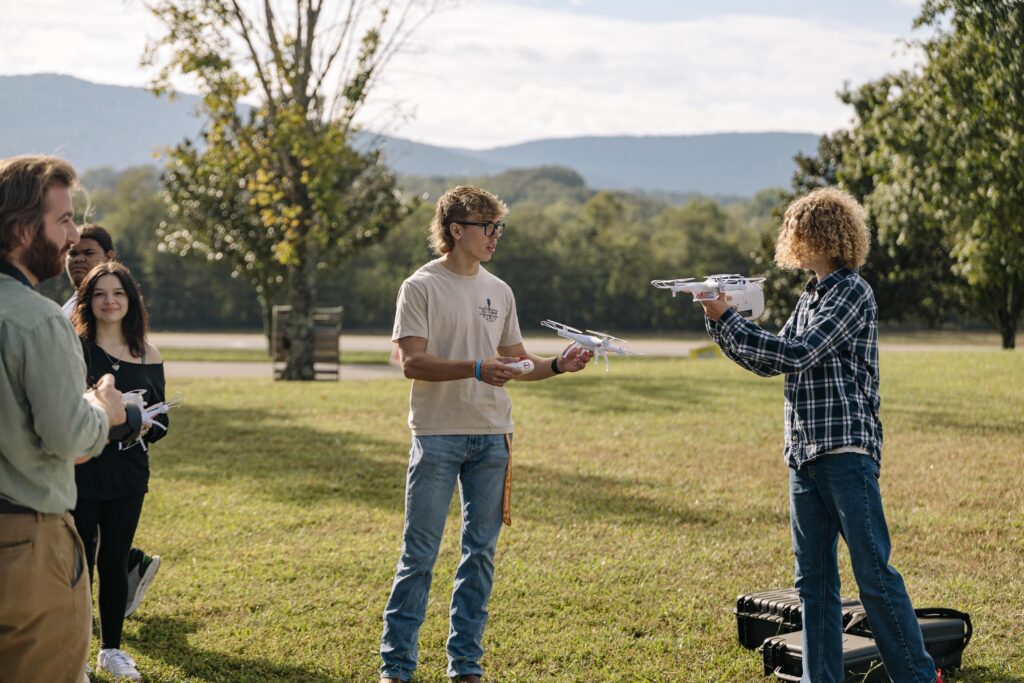
You see, at Bledsoe County Public High School, something special is happening. This past year, the school implemented a new drone and fiber program for its students.
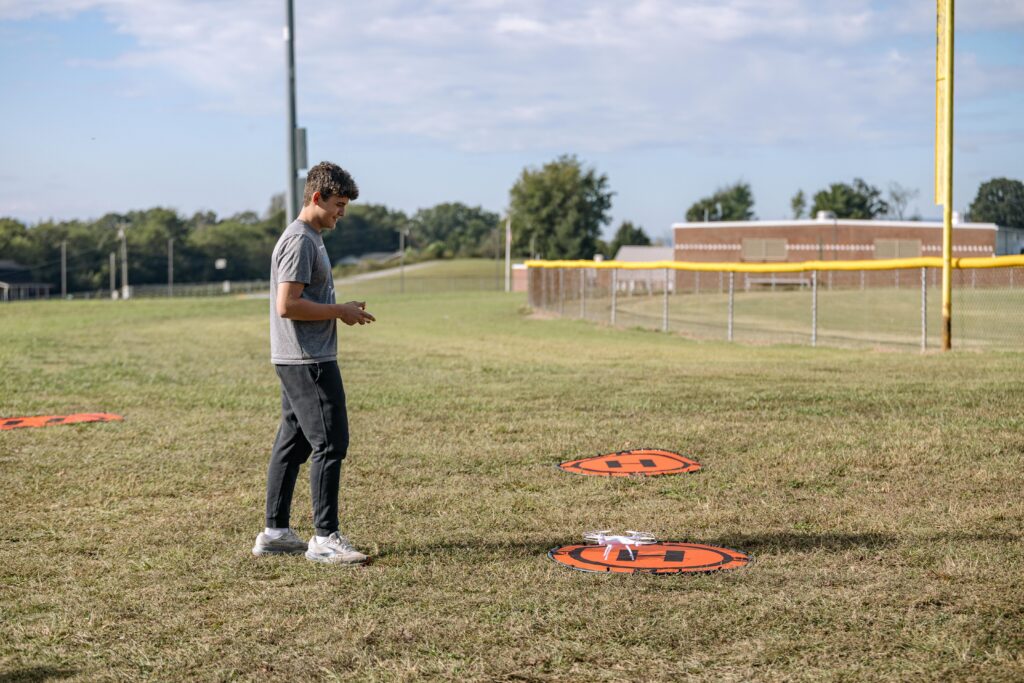
“The flying is one of my favorite parts about it,” Bledsoe County High School student Logan Collins said. “You can see the entire world from there.”
Mark Oxner, Bledsoe County High School’s security coordinator, came out of retirement to begin the program, which was made possible through a 2024 Digital Skills, Education and Workforce (DSEW) grant provided by the Tennessee Department of Economic and Community Development (TNECD).
Through the course, Oxner teaches agribusiness, search and rescue, security, real estate, surveying, roof inspecting and car accident review. In fact, he’s even formed partnerships with various local and state agencies to allow the students to receive real-world experience.
“We have agreements with TEMA, State Parks and the sheriff’s office. If someone is lost in the woods, they’re going to call our student team to go out there and help find the lost people,” Oxner said.
According to the Tennessee Higher Education Commission (THEC), in 2024, Bledsoe County graduates attended college at a rate of 40%. Out of Tennessee’s 95 counties, that puts Bledsoe 92nd with Monroe, Cocke and Johnson counties rounding out the bottom three. For the majority of students in the county, college just isn’t an option they feel is viable.
“We don’t have a lot of kids going to college as much—we’re a small town,” recent graduate Franklin Cagle said. “Most of us have worked on farms since we were little, and college life doesn’t really suit us.”
That means it’s up to the high school to prepare students for the real world. That’s where the drone program comes in.
“We thought we had an opportunity with these drones to teach the kids stuff that they could make really good livings with,” Oxner said.
Bledsoe is one of Tennessee’s 10 distressed counties, indicating it ranks among the bottom 10% of counties most economically distressed across the country. Economic status designations are identified through a composite measure of each county’s three-year average unemployment rate, per capita market income and poverty rate. Based on these indicators, each county is then categorized as distressed, at-risk, transitional, competitive or attainment.
In other words, in a distressed county, a program like this one can unlock opportunities that students weren’t aware existed.
“You can do a lot with a drone license. You can start an agriculture business where you can spray herbicides, pesticides. You can scout out land for realtors, and you can also plant seeds,” Peters said. “Like if the ground is wet and you can’t get in there with a tractor, you can spray it with drones.”
Therein lies what is perhaps the most integral aspect of Bledsoe County’s drone program: agribusiness. Being an incredibly rural region, agriculture remains one of the county’s strongest economic drivers. Yet, there seems to be a large hole the market is facing.
“Drone agricultural business would be huge because there’s no one doing it yet,” Peters said.
In fact, demand is so high that farmers across the region are turning to students in the drone program for help.
“I have a waiting list of farmers that want us to come out there, analyze and spray their crops,” Oxner said.
The innovative tactic, at some level, is easy. In fact, both Oxner and Peters acknowledged that the actual flying of the drone is fun and relatively simple after the initial learning curve.
Knowing how to operate a drone is one thing; building a successful business around those skills is another.
“Starting a drone business is easy. Maintaining the drone business—you have to have business skills,” Oxner said. “So, we have to give our students that are flying drones (the) science and the business skills to be successful, and that’s what this program aims to do.”
For some, the program represents a chance at both a better life and an opportunity to give back to a community that has supported them, in many instances, their entire lives.
“For me, it gives you that security of knowing I don’t have to go to college, or I don’t have to do this or that,” Cagle said. “I can not only help my community, but I can also use my hands and my skills.”
THE OPTICS OF FIBER
Though the drones generate the majority of the buzz (quite literally, I might add), there’s another aspect of the program that arguably deserves as much praise, if not more.
As Tennessee and Bledsoe County build out their fiber and broadband infrastructure, they need a workforce to install the materials and handle the equipment.
“We hadn’t even thought about doing anything of this scale. We started doing some research and realized that fiber optic technicians are something that, in this area, we have a market for,” Oxner said. “But we have no ability to teach fiber optics to our students. We don’t have teachers who are skilled in that.”
Or at least they didn’t until this grant.
“We met with BTC Fiber and said, ‘We can provide the facilities, and if we get this grant, we can provide the equipment. Can you provide a teacher? Then, we’ll put in the grant application that we’ll pay the teacher for that.’”
Not only did BTC Fiber – short for Bledsoe Telephone Cooperative, the local internet, phone and TV provider – provide a teacher to the high school, they did so free of charge.
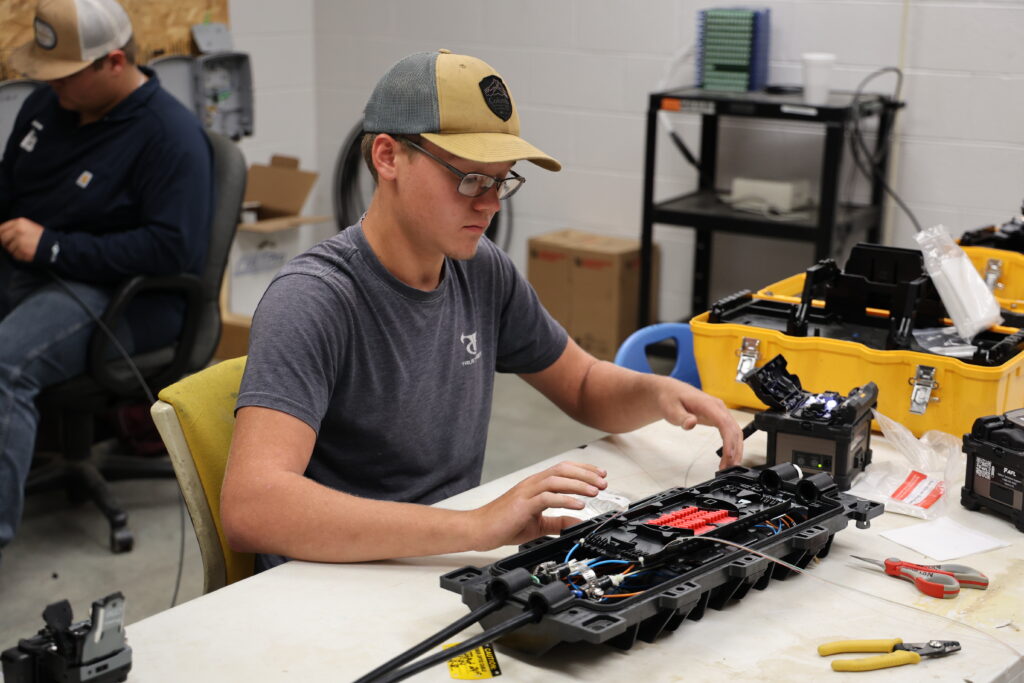
Once a day, BTC Fiber cable technician David Brown comes in for an hour to teach the students the science of the trade. He admitted it wasn’t ever something he saw himself doing when his now-retired boss called Brown into his office roughly two years ago to gauge his interest in the idea.
“I thought he was joking because we’re all the time joking, pulling pranks on each other,” he said.
About six months later, Bledsoe County officially received word that it had been selected for the grant from TNECD, and even then, Brown wasn’t fully convinced his leadership was serious. They were, and despite some of his own reservations due to his lack of teaching experience, he accepted the role.
Brown teaches the students a wide array of topics related to fiber optics, beginning with the construction and splicing of fiber and ending with actual installation.
“I’m not a big math guy, just don’t like it. But figuring out I’ve got 12 fibers, and I’ve got to memorize what color they are and what order they are, then there’s 12 tubes. Inside each of the 12 tubes, there are different colors of fiber,” Cagle said. “So, I’ve got to do my math. There’s like a 288 fiber or a 144, and I’ve got to figure out what color and what tube, and then I might have to splice that back. That could determine, you know, 100 people’s internet.”
If it sounds complex, it is.
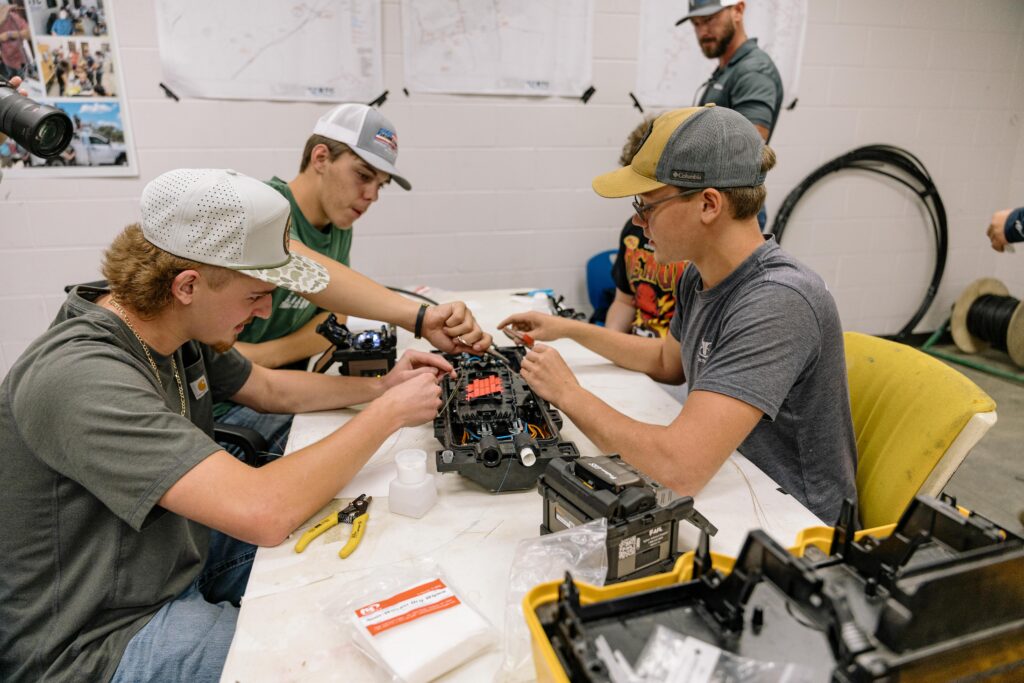
Despite the complexity of the course, the students seem to love it, if not for the actual curriculum, then for the leadership that Brown displays.
“We don’t only learn about fiber optics in this class,” Cagle said. “We learn real-life examples from other things. How to carry ourselves, how to act, how to have a good work ethic, show up to work. Characteristics that we can put into work and better ourselves.”
In an extremely rural region that doesn’t see a ton of postsecondary education, Brown sees it as almost a responsibility to ensure his students have someone to look up to.
“Some of these kids, they don’t have a parent or a guardian,” he said. “They don’t have anybody pushing them to go to school or wanting them to be here.”
Despite his initial reluctancy, the synergy that has developed between Brown and his students has been gratifying for both sides.
“It’s really rewarding, and it’ll make you almost emotional,” Brown said, choking up a bit. “Just getting them to actually come and want to do it. Seeing those kids grow like they have and the way they look forward to that class so much, that time of day, it makes you feel good.”
Oxner agrees.
“If we change one kid’s life, it was worth it,” Oxner said. “Fortunately, we’re not changing one kid’s life, we’re changing multiple kids’ lives.”
CHANGING LIVES
While TNECD is often recognized for major business recruitment and expansion announcements—such as Starbucks’ and In-N-Out’s new East Coast corporate offices or Korea Zinc’s record-breaking $6.6 billion investment—an equally important part of the department’s mission is supporting community and rural development across Tennessee.
During the current administration, since 2019, TNECD has invested more than $1.5 billion in community and rural development (CRD) grants (including the department’s recent announcement of historic funding to ensure all Tennesseans will have access to high-speed broadband), reaching all 95 counties across the state. The funding has supported a wide range of initiatives from broadband expansion and site development to historic downtown revitalization, infrastructure planning and other strategic community projects.
“Tennessee’s major business development wins often draw the spotlight, but those projects are only possible when we’ve laid the groundwork for companies to succeed here,” said TNECD Assistant Commissioner of Community and Rural Development Brooxie Carlton. “Our goal is to ensure every Tennessean, from Memphis to Mountain City, has access to opportunity, whether through education, workforce training or quality jobs, and our investments to expand broadband infrastructure and digital skills are helping make that goal a reality.”
Broadband is a cornerstone of the CRD division within TNECD. Of the more than $1.5 billion distributed under this administration, approximately $1 billion was dedicated to broadband initiatives. These funds can be allocated or leveraged by local communities in a variety of ways, including support for workforce and training programs such as Skills for Success, which received funding through a TNECD Digital Skills, Education and Workforce (DSEW) grant.
DSEW grants vary from county to county. For example, in addition to Bledsoe County’s drone and fiber program, Davidson County utilized a grant to establish courses teaching digital literacy and career readiness. At the end of the course, each of the students who finish got to keep the laptop they were working on.
“The unique nature of our DSEW grants is what makes them so effective,” TNECD Broadband Director Taylre Beaty said. “When each community has the feasibility and flexibility to allocate its resources in the way it sees fit, it allows them to target those with the most need.”
But perhaps lost in the broad strokes of each announcement TNECD makes regarding broadband is the fact that there is potential for real, tangible impact.
This funding goes to real people, and it matters.
“Without TNECD, this program would be impossible,” Oxner said. “We’re a rural school in a distressed county, and there is no way, as a school district, that we could put this type of program together.”
Perhaps most indicative of the grant’s impact was one final remark Cagle made in the final moments of his interview:
“It has changed my life by all means.”
More information about Tennessee’s broadband programs and the BEAD initiative is available here. Continue to follow TNECD on social media as the department continues its “Road to 100” campaign to highlight real stories from across the state about how broadband and digital literacy are transforming lives, supporting small businesses, strengthening education and powering rural communities forward.