
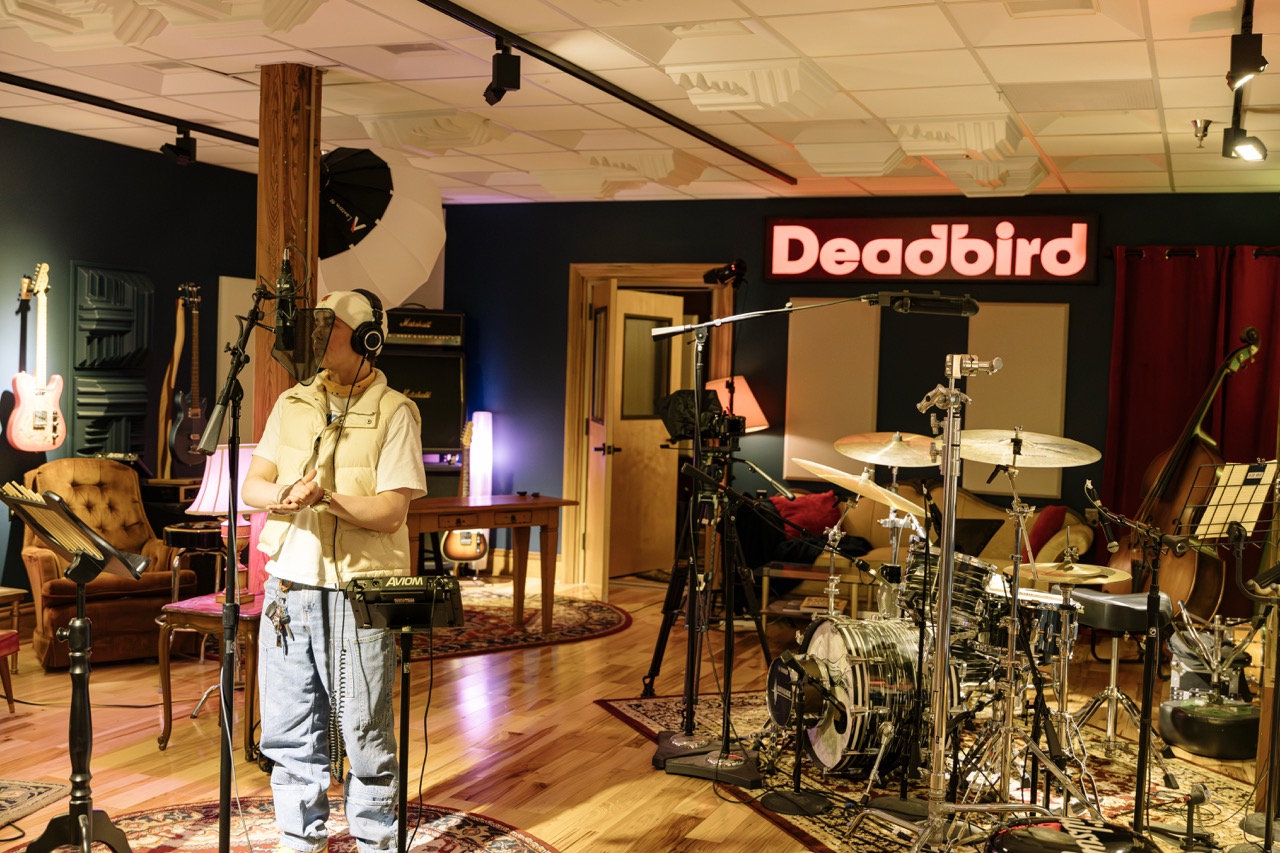
CHATTANOOGA, Tenn. (TNECD) — For Songbirds Foundation Program Manager Amber Carrington Lewis, there’s nothing quite like unlocking something special within the students she teaches.
“I’m seeing what it’s doing in the moment, in real time, especially my elementary kids. They’re experiencing something on that stage when we perform their song that they created from nothing, out of their mind,” Carrington Lewis said. “Some of them just cry because they’re overwhelmed with this joy they’ve never experienced.”
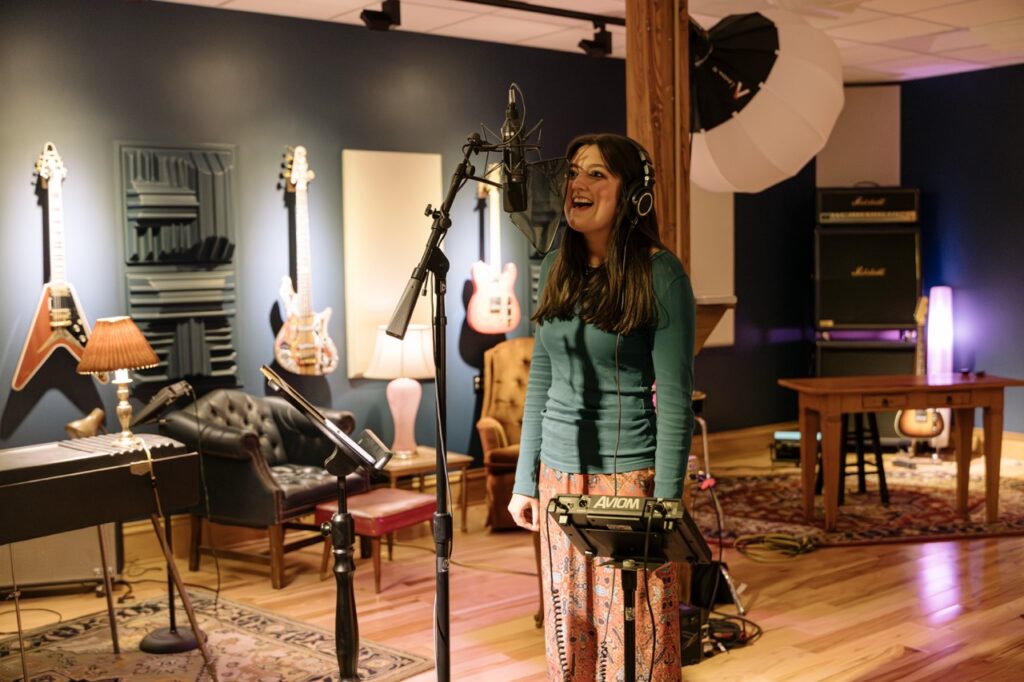
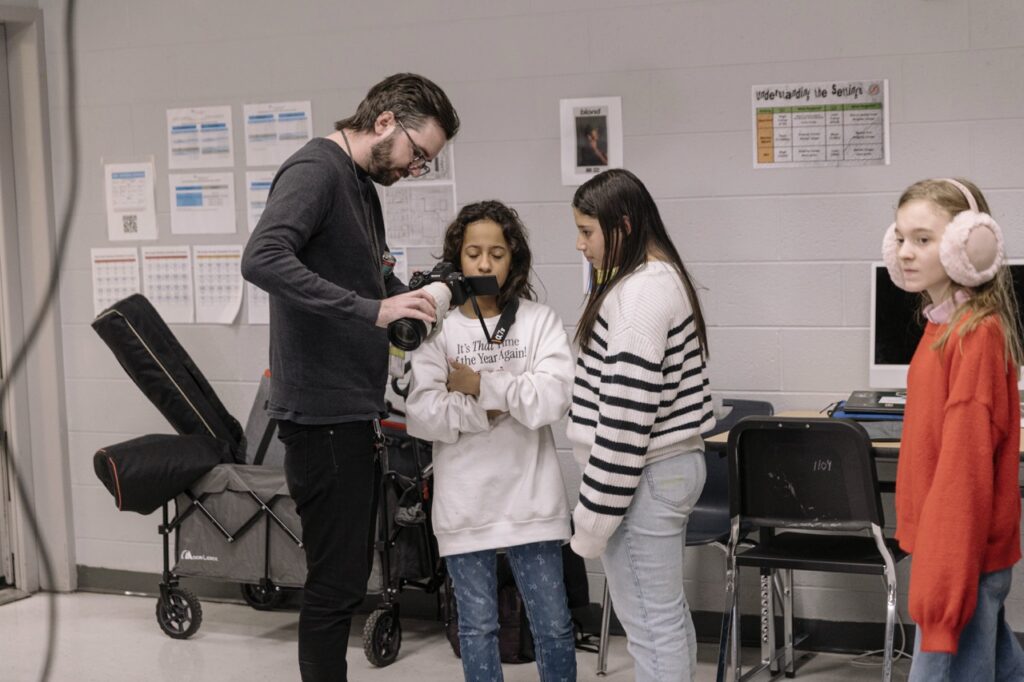
Songbirds encompasses a live music venue with a creative workforce education and training program that serves Hamilton County through in-school and after-school programming. Students explore careers across the creative economy — from songwriting and music production to photography, videography and event planning — and gain hands-on experience with the equipment and technology professionals use in those fields. In particular, she teaches an elementary songwriting class, where students write poems, and she and other members of the foundation help put those words to music.
“We have students come and sit in on recording sessions, getting to write with legit musicians that are already doing it for real, in the real world,” Carrington Lewis said.
But Songbirds’ impact is felt among students of all ages across Hamilton County.
“If I didn’t have any of this, I don’t really know where I would be,” Chattanooga High Center for Creative Arts student Marydee Barnett said.
Barnett initially wanted to pursue a career in musical theatre before the nonprofit helped develop and parlay that into something different: producing her own music and art.
“As I got older and being put into this kind of [Songbirds] stuff, I realized I like making my own stuff, and I’m not sure the musical theatre aspect is what I’m in love with the most,” she said.
Songbirds supports students in many ways, but nearly everyone interviewed for this story described student self-expression as an integral part of the program.
“Growing up, there’s a lot of a sense of rejection — and I know me getting older and being thrown into the real world, I know I’m going to see a lot of rejection,” Barnett said. “But I feel like Songbirds has put me in this light where I feel like I’m being showcased in the way I’ve wanted to be for so long.”
Stronger in Harmony
Songbirds Foundation has been a nonprofit since 2017. It operated alongside the for-profit Songbirds Museum, but when the museum closed during COVID-19, the foundation took over its assets and directed them toward its educational mission.
One thing led to another, and Songbirds eventually found itself with space for a music studio, which put it in direct competition with Dynamo Studios, another Chattanooga-based nonprofit helping to expose students to the music and entertainment industry. Instead of trying to compete, Executive Director John Dooley, Songbirds Board Chair Johnny Smith and then-Dynamo executive director (now-Songbirds Executive Officer) Kessler Cuffman decided in 2025 to merge under one name: Songbirds.
“It made way more sense to team up,” Dooley said. “Bigger student body, better access, better outcomes, and that’s where we are today.”
Dynamo, named for the now-defunct City High Dynamos, had served more than 1,000 students in the year leading up to the merger and was becoming a growing force in music education.
Today, Songbirds Foundation runs full-time programs in nearly 10 schools with seasonal afterschool programs in eight elementary schools, provides guitars and guitar equipment to more than 150 schools across 13 states and holds instructional partnerships with out-of-school organizations including Boys & Girls Club, Girls Inc. and Y-CAP.
“The reason our model is unique is because most orgs, when they offer programming, it’s purely extracurricular, as in after school, and that’s great,” Cuffman said. “But one of the differentiators between us and a lot of other organizations is that we are full-time in schools.”
Songbirds pilots a class or curriculum with a teacher from their organization in a private, typically magnet or arts, school. As it proves worthwhile as a concept and students grow more interested, foundation members pitch to public school leaders to prove its worth to all students, and Songbirds will move those concepts to the public sector. The nonprofit will also provide a stipend to make the role more attractive for high-end industry talent.
Though the programming is still very young, Songbirds has experienced significant success. In fact, late last year, some of its students, thanks to the connections made through the nonprofit, were able to capture and create content for Ludacris, Usher, Fergie, LL Cool J and other famous artists at ONE Music Fest in Atlanta.
“I’ve seen students that have been in the program for a few years get opportunities that some people don’t get in lifetimes,” Chattanooga Preparatory School instructor Chaysen Patrick said.
Though Patrick and Red Bank Middle School instructor Jubril Sanyaolu see their roles as a duty, it’s really a joy for the pair to unlock something inside each student that yearns to, at some level, learn.
“I just want to help guide the next generation into something that’s worthwhile. There’s a lot of hidden talent, a lot of talent that needs to be nurtured or even just realized,” Sanyaolu said. “You’re digging in the tunnel and you’re just right there about to unravel something that’s fortune, and I want to be that person for these kids.”
These soft skills transcend the music or entertainment industries, instead being useful tools that apply to just about every sector and industry across the globe.
“We’re a workforce development org,” Cuffman said. “We just use the arts as a vehicle.”
Think about the ending of a movie, video game or TV show. As the credits roll, there are dozens, if not hundreds or thousands of names. Each of those names represent a job someone had to do to make that production happen.
“There’s nothing wrong with making money while being a creative, and there’s a lot of ways to do that,” Cuffman said.
Within Reach
Multiple people interviewed for this story yielded the same sentiment: They wish a program like this existed when they were growing up. Programming aside, the equipment cost alone is typically enough of a deterrent for the vast majority of students and families across Hamilton County to consider this type of education feasible.
“It seemed unreachable just because of how expensive the equipment was. So, to me, having a program like this is completely and utterly awesome,” Sanyaolu said. “This is like a blessing from God.”
There’s no doubt programs like this cost a significant amount of money. But Songbirds isn’t alone in its approach and investment.
“This was made possible in large part by (TNECD),” Cuffman said. “I had a lot of great ideas, we’ve got a great team also with great ideas and they have ability to execute, which is why we’re here now, but the thing is, that doesn’t happen without resources and significant investment.”
Perhaps even more important were the societal and reputational impacts that came as a result of the state pledging support for the project.
“People were like, ‘Oh these guys actually know what they’re doing,’ and I was like, ‘Yeah, respectfully, we’ve been telling you from the beginning we knew what we were doing! But now you recognize that,’” Cuffman said. “So, the state endorsing us like that was critical to where we’re at right now.”
While TNECD is often recognized for major business recruitment and expansion announcements — such as Starbucks’ and In-N-Out’s new East Coast corporate offices or Korea Zinc’s record-breaking $6.6 billion investment — an equally important part of the department’s mission is supporting community and rural development (CRD) across Tennessee, including the department’s announcement this year of historic funding to ensure that the entire state has access to high-speed broadband.
Broadband is a cornerstone of the CRD division within TNECD. Of the more than $1.7 billion allocated to communities across the state during this administration, more than $1 billion was dedicated to broadband initiatives. These funds have been leveraged by local communities in a variety of ways, including support for digital workforce and training resources like the ones found at Songbirds in Hamilton County, which received funding through a TNECD Digital Skills, Education and Workforce (DSEW) grant.
DSEW grants vary from county to county. For example, in addition to Chattanooga’s arts programming, Bledsoe County utilized a grant to establish a program centered around drones, agribusiness and fiber optics.
“What makes these grants so impactful is that every community has different needs, and local leaders are best positioned to understand what will make the biggest difference,” TNECD Broadband Program Director Taylre Beaty said. “Our role is to help provide the resources to turn those local ideas into real opportunities for Tennesseans.”
It’s a mutually beneficial relationship. TNECD doesn’t have the local, institutional knowledge that those within the county and at Songbirds have, but the department is willing to provide grant dollars to help fund the programming. That, in turn, yields more opportunities for students across Tennessee which, in turn, yields better outcomes for everyone across the state.
In total, TNECD’s CRD funding has touched all 95 counties across the state and supported a wide range of initiatives, from broadband expansion and site development to historic downtown revitalization, infrastructure planning and other strategic community projects since Gov. Lee took office in 2019.
“When we talk about investing in Tennessee’s communities, we’re ultimately talking about investing in people,” TNECD Assistant Commissioner of Community and Rural Development Brooxie Carlton said. “Whether it’s broadband infrastructure, workforce development or educational opportunities, these investments help communities build a stronger foundation for long-term growth and prosperity.”
The numbers are eye-popping, which, from the department’s perspective, is great. But lost in the shuffle of eye-popping numbers is one crucial fact: The numbers aren’t really just numbers. They represent real people. Chattanooga wants to invest in those real people — those real students — so they can come back and invest in Hamilton County. And supporting Songbirds is a major step in doing so.
“Most schools don’t have opportunities like this to collaborate with Songbirds, so it really set us far apart,” Trammell said.
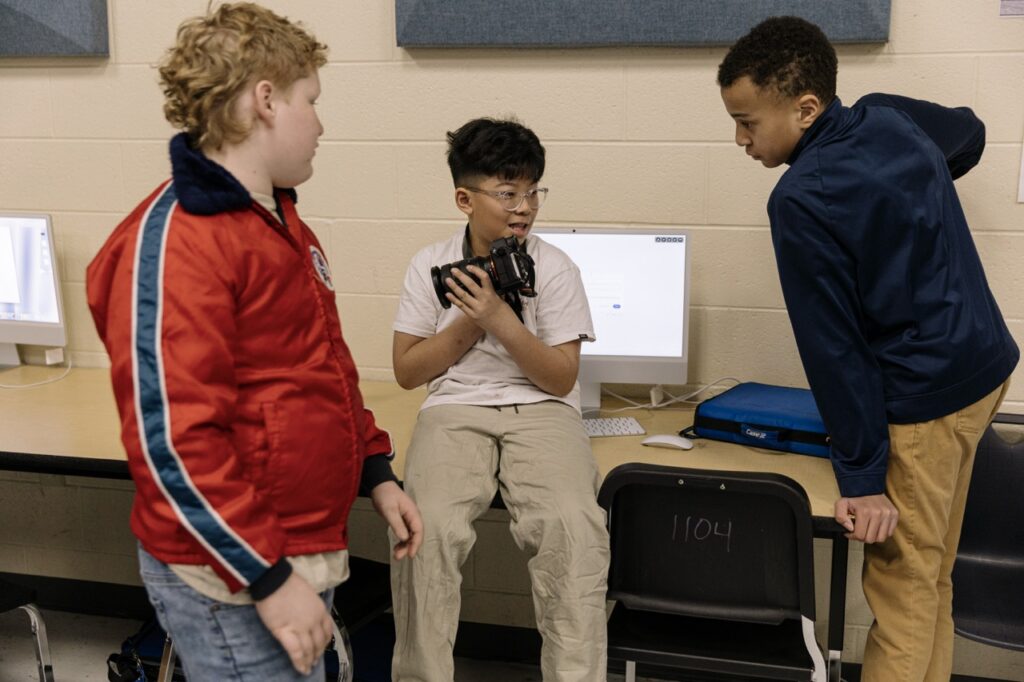
For now, the nonprofit will continue doing what works. Songbirds leaders recounted multiple examples of their success, including a group of students who became so enamored with photography that they launched a GoFundMe, utilized the funding to purchase a camera and are now making money as a small business. And it all started from one particular factor they didn’t have before: access.
“That impacts not only those kids, but also their families, their families start believing in this as a viable career,” Dooley said. “The trajectory of a community just changed as a result of that access.
But perhaps most importantly, it helps students develop a sense of who they are.
“It’s insane,” Barnett said. “I don’t think I ever would have found really, truly, who I am as a person without Songbirds and without being able to have this experience.”
More information about Tennessee’s broadband programs and the BEAD initiative is available here. Continue to follow TNECD on social media as the department continues its “Road to 100” campaign to highlight real stories from across the state about how broadband and digital literacy are transforming lives, supporting small businesses, strengthening education and powering rural communities forward.