
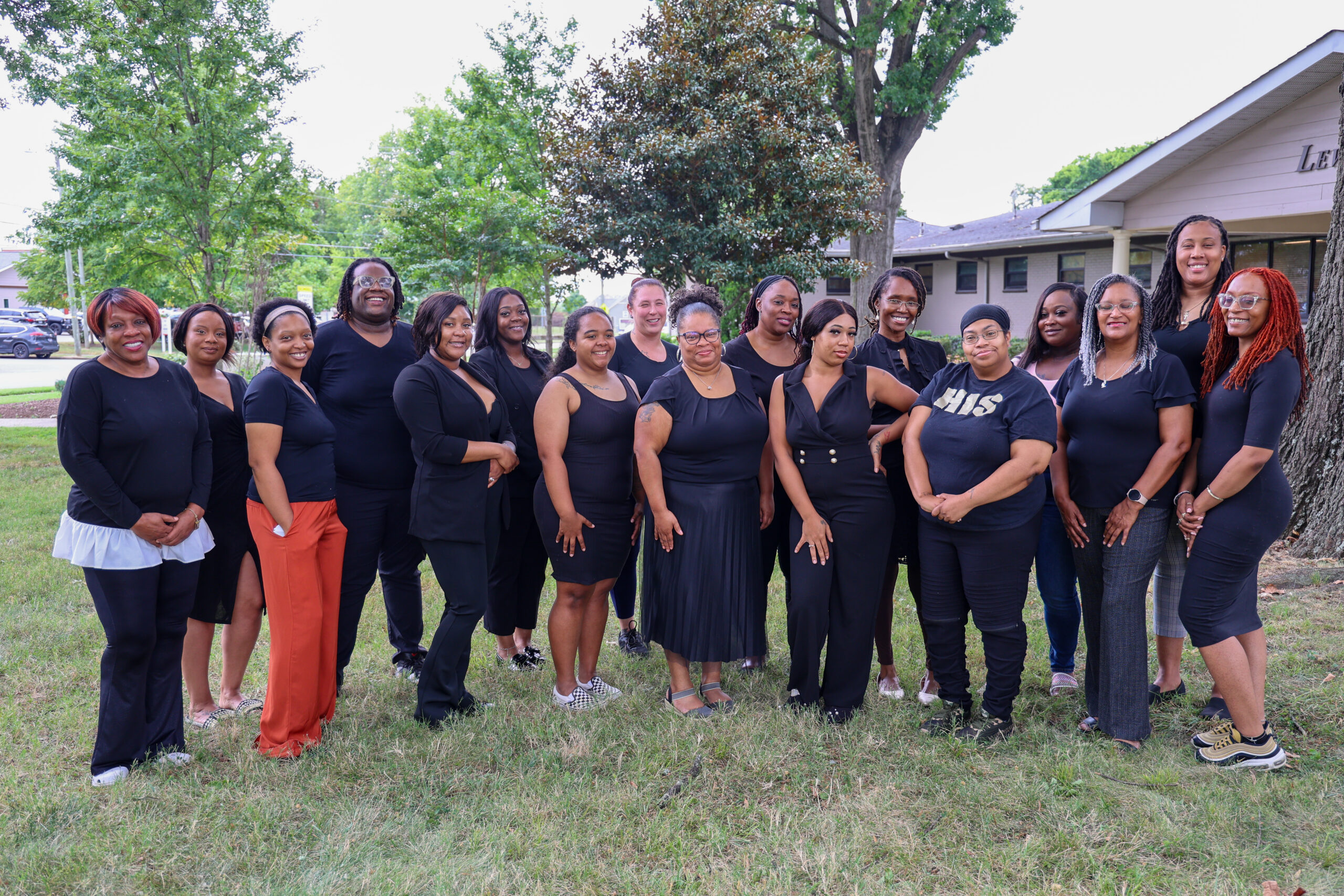
“They say tourists know more about Nashville than the people who live here.”
Adrian Titington was half joking when he said that to the Tennessee Dept. of Economic and Community Development (TNECD) in regard to digital education, but it does somewhat ring true. Nashville, and really the entire state of Tennessee, is known for its tourism, pumping in more than $30 billion in direct visitor spending in 2024 alone.
Beyond just tourism, Nashville is experiencing powerful, rapid growth, being named one of the fastest-growing metro areas in the country as recently as last year. As it grows and as the state continues to focus its efforts in attracting more research and development (R&D) and innovative companies, the need for a larger, more technologically skilled workforce will be required.
We anticipate these to be high-paying jobs—exceptional opportunities for many people in Nashville, particularly those with strong technology skills. But what about the residents who’ve never used a laptop or navigated an online job application? How will they share in the opportunity?
“I didn’t know what Microsoft Word was, Google Docs, PowerPoint,” Titington said. “I had heard about it, but I never knew what it was.”
Of course, that was before Titington participated in Nashville’s Metropolitan Development and Housing Agency’s (MDHA’s) Skills for Success program, aimed at helping those registered in the course to learn more about technology and how to utilize it properly.
To most people, using a laptop is second nature. But what if you’ve never touched a laptop, computer or software before? Or, worse, what if you have a criminal record and can’t seem to land a job despite having served your time?
“I have had so much trouble finding a job or getting a job,” Amanda Curry said. “I have a past, which means I have a record, and the world just isn’t set up where you are just forgiven on paperwork.”
That’s where Lisa Booker, MDHA’s Resident Services Community Partnership Supervisor, and the Skills for Success program step in. Funded through a grant from TNECD, Booker launched the program after recognizing a critical gap: Many MDHA-supported residents simply hadn’t been taught the basic skills needed to use a computer.
“We talked to several employers, and we asked them, ‘What are you noticing that’s showing up in your space, and why are you not hiring?’” Booker said. “They said, ‘Lisa, we’re having people show up, they can’t send nor receive emails. They don’t know how to work in Word, they can’t send a PowerPoint, they can’t send Excel, they can’t research a project, they don’t know how to browse the internet.’”
Beyond learning the fundamentals of computer use, participants who complete the three-week course leave with a laptop of their own. Meeting three times a week, Booker leads cohorts of 20 students through lessons in digital literacy, financial literacy, resume writing, interview preparation and more, equipping them with both the tools and the confidence to pursue new opportunities.
More Than Just a Laptop
At some point in your life, you’ve probably heard a variation of the proverb, “Give a man a fish, he eats for a day. Teach a man to fish, and he eats for life.” Booker utilizes the same concept, but with a laptop instead of a fishing rod.
“It’s not enough just to give them a laptop,” she said. “You have to educate them on it.”
For most, the promise of leaving the program with a brand-new laptop was the initial draw.
“That was the bonus for me, that was why I signed up to be honest,” Curry said. “I was like, ‘Oh I need a laptop.”’
But the course was so much more than an LED screen and keyboard.
“It’s way bigger than that. It’s great to have the laptop,” Curry said. “But they could keep the laptop because what I got out of this class is bigger than that laptop.”
Booker’s program covers a myriad of skills necessary for success in an increasingly digital world, including financial literacy, interview and job training, social media etiquette and attire. For example, many people coming into the program have never put together a resume before.
“You need several resumes,” licensed massage therapist and certified doula Muriel Bailey said. “Every resume doesn’t work for every job criteria.”
Others likened it to clothing.
“You could have an outfit and change it around in different ways,” artist Slyms Bazile said. “You can change that outfit (or resume) around when you’re applying to different jobs.”
Others still pointed not necessarily to the tangible benefits the course offered – which included a field trip to Renasant Bank in Nashville for a financial literacy segment – but instead pointed to the confidence and opening of doors they never knew existed.
“Education is key, it really is,” Bazile said. “When you know better, you do better.”
Consider Brittney Gholston. To say her path has been difficult would be an understatement. Pregnant at 12 and a mother by 13, raised by parents she describes as struggling with addiction, later carrying a felony conviction that has since been expunged and now navigating a divorce—her life has been marked by challenge at nearly every turn.
For her, the program delivered benefits that were both tangible and transformative.
“I needed the people, I needed the love, I needed the push,” Gholston said. “I don’t have anybody, it’s just me and my son.”
Gholston, whose son recovered from a gunshot wound when he was 15 – which she says made her take life much more seriously – originally took the class to further opportunity for herself in the job market. But now, having learned more about homeownership and financial literacy, she has a new goal in mind.
“I’m not staying on MDHA (assistance). I’m not,” Gholston said. “I’m going to be a homeowner, I’m telling you. I’m doing it.”
It’s a goal she never really considered possible until Skills for Success.
“If I would have known the resources that are in these classes, I would have been a homeowner (years ago),” she said.
Moreover, many in the program not only find digital literacy skills but also a community, and one in which they’re seen and heard.
“We don’t have to be ashamed for the things that we have done, the mistakes we’ve made,” Curry said, through tears. “I am smart, I am intelligent, I can still do great things.”
The Bloom Keeper
Every participant TNECD spoke with pointed to one person as the catalyst for change.
Booker didn’t just reshape their understanding of technology—she shifted their mindset, influencing how they approach challenges, opportunities and life itself.
“To me, she is the bloom keeper, the seed bearer, because she planted so many seeds within us,” Bazile said.
Booker was raised in rural Fayetteville, Tennessee, in the late 1960s and early 1970s. She went on to earn both her bachelor’s and master’s degrees from Lipscomb University in Nashville, then built a more than 20-year career as a loan officer and homeownership educator, helping families navigate the path to financial stability.
Just under five years ago, Booker was teaching a few classes each month for MDHA while at her banking position, at first as a volunteer before an MDHA social worker approached her about taking more serious, paid opportunities at the association. Not long after, the same social worker approached her about a full-time position with MDHA.
“She told me, ‘Lisa, we have a job with your name on it,” Booker said, laughing.
She accepted without hesitation—and the impact of that decision has been profound for the people who now take part in the programs she leads.
“She’s almost like a second mom to me, I love that woman,” psychology student Timothy Trimble said. “I’ve always been told, ‘Oh you got potential, you got this, you got that,’ but she actually brought my potential out and have me see it for myself.”
In fact, the term ‘second mom’ was volunteered by multiple participants in the Skills for Success program when asked to describe Booker.
“Ms. Booker is amazing,” Curry said. “You can tell the MDHA is not just about paying her bills, she really cares about the women and men in the community who have slipped through the cracks.”
The “Road to 100” is Nearly Complete
Of course, the funding for such a course has to come from somewhere. Enter TNECD.
While much of the department’s headlines are dominated by business development (think Oracle’s new HQ in Nashville, the introduction of In-N-Out to Middle Tennessee or its record-breaking $6.6 billion investment from Korea Zinc in Clarksville and Gordonsville, Tennessee), a large chunk of the department is dedicated instead to community and rural development (CRD).
Since the beginning of 2024, TNECD has invested nearly $720 million in community and rural development grants (including the department’s recent announcement of historic funding to ensure all Tennesseans have access to high-speed broadband), reaching 94 counties across the state. The funding supported a wide range of initiatives—from broadband expansion and site development to historic downtown revitalization, infrastructure planning, and other strategic community projects.
“The majority of the counties in our state are considered rural, and we want to make sure that people moving to all Tennessee communities can have a great life,” TNECD Assistant Commissioner of Community and Rural Development Brooxie Carlton said. “The business development side of our department garners a lot of attention – and rightfully so – but there’s a lot that goes on behind the scenes before we can get to those major jobs or capital investment announcements.”
Broadband is a cornerstone of the CRD division within TNECD. Of the nearly $720 million distributed in 2024 and 2025, nearly $460 million was dedicated to broadband initiatives. These funds can be allocated or leveraged by local communities in a variety of ways, including support for workforce and training programs such as Skills for Success, which received funding through a TNECD Digital Skills, Education and Workforce Development (DSEW) grant.
Opportunity is no longer defined by zip code, which is why, alongside this historic announcement, our department is rolling out a new series: the Road to 100, which celebrates the progress we’ve made to bring high speed internet to every corner of the state and the lives of Tennesseans that have been changed along the way.
“Under the leadership and vision of Governor Lee, we are thrilled to announce a strategic investment that will connect all remaining unserved households and businesses in Tennessee,” TNECD Broadband Director Taylre Beaty said. “We are so excited to partner these internet service providers here in Tennessee to complete broadband deployment statewide.”
Put plainly, this funding is real and goes to real people, and it matters.
“Without the funding, it’s not possible. Allowing this type of funding is allowing opportunities. It’s allowing people the opportunity to dream. It’s allowing us the opportunity to invest in the community we work and serve in,” Booker said, through tears. “It’s all of our responsibilities to make this a better world. That’s what this funding is doing – making this world a better place.”
Regardless of the stats, numbers and grants TNECD provides, the department’s success in economic development is determined by the lives changed and impact made. Sure, the funding is great, but it’s about way more than just that – it’s about the people.
“Imagine being 41 and crying in a financial literacy class because no one has ever taught me that,” Curry said. “If I’d had those skills, who knows where I’d be.”
More information about Tennessee’s broadband programs and the BEAD initiative is available here. Continue to follow TNECD on social media as the department rolls out its “Road to 100” campaign to highlight real stories from across the state about how broadband and digital literacy are transforming lives, supporting small businesses, strengthening education and powering rural communities forward: Twitter, Instagram, LinkedIn, Facebook and YouTube.