TIPTONVILLE, Tenn. (TNECD) — As technology continues to evolve, so does education. And nowhere is that more evident than Lake County.
“Looking at a textbook can get pretty drab,” Lake County High School Assistant Principal Carrie Regalado said. “When you actually have the things, you can touch it, you can feel it, you can work it yourself, it’s more exciting.”
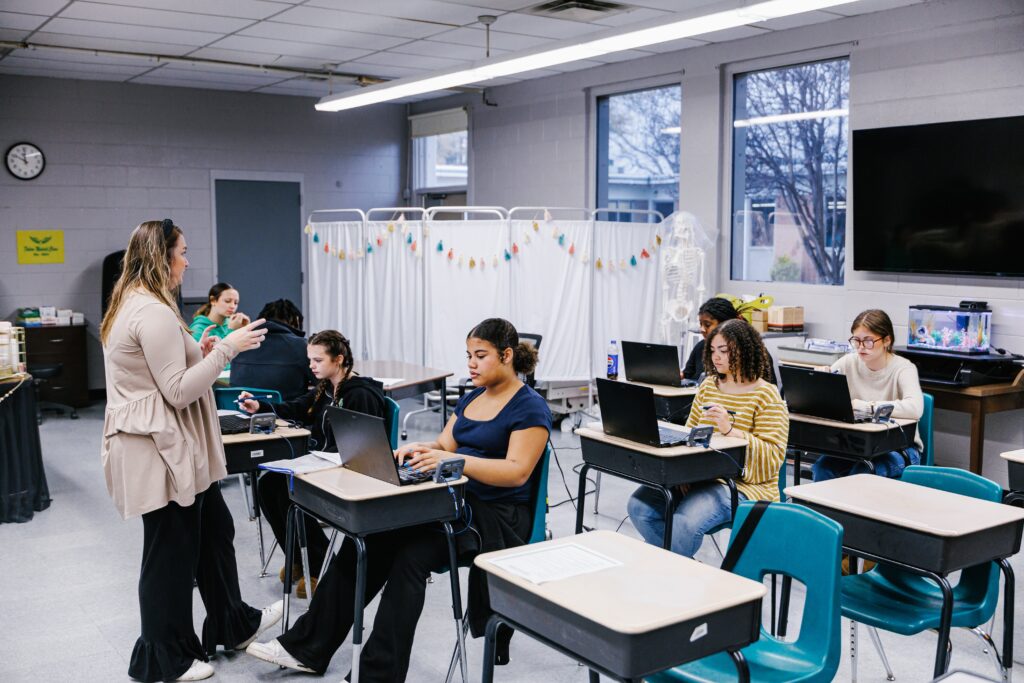
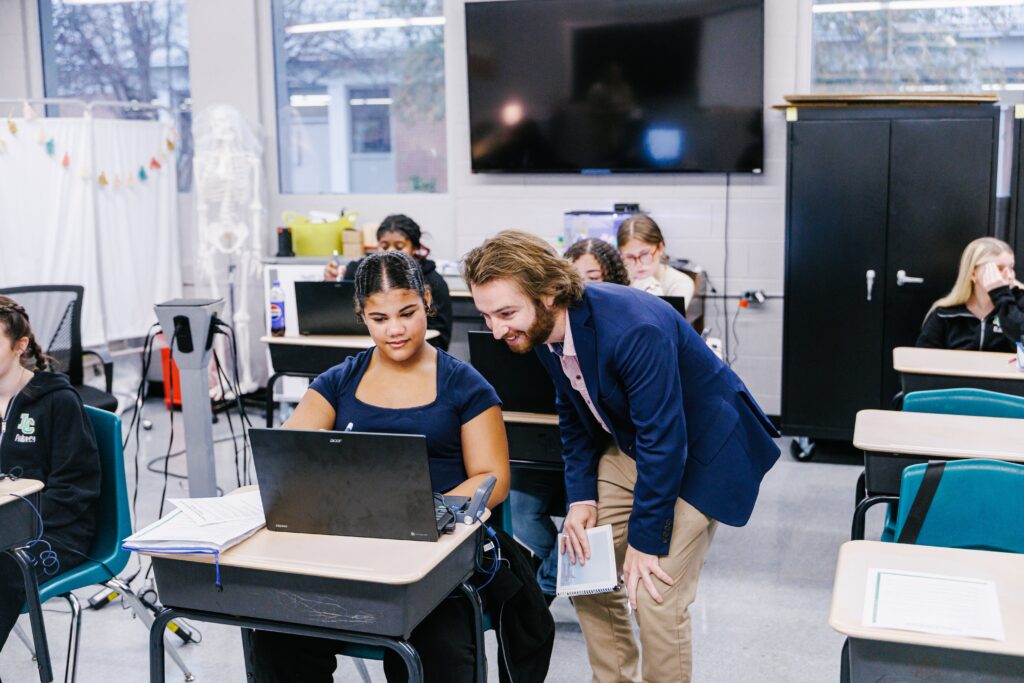
There’s seemingly more excitement than ever at Lake County High School (LCHS), particularly in the field of healthcare, thanks to a special new technology: zSpace.
“They’re going home and telling their parents,” LCHS health sciences teacher Kelsy Lebo said. “I have parents calling, ‘We want to see the equipment, they’re so excited when they come home.’”
This year, the high school implemented technology and products from U.S.-based zSpace. The company develops augmented and virtual reality experiences to be utilized in STEM, CTE and other career readiness programs across the country.
“Me, personally, and I know a bunch of other students like me, I’m a visual learner,” student Renesmee Harrell said. “So, being able to see this and have hands-on practice will help with knowing what I’m going into.”
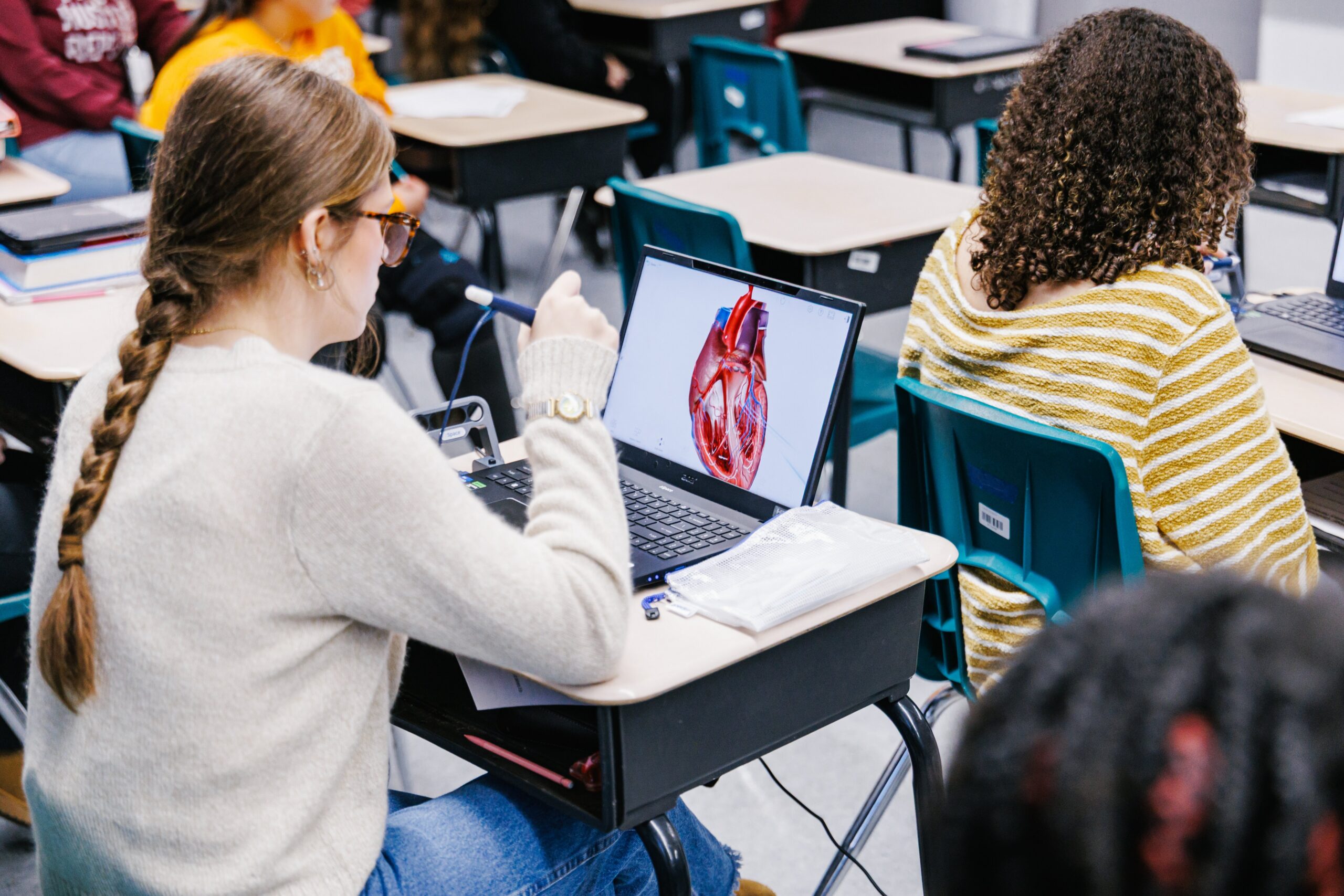
At LCHS, the school has implemented the technology in its health and welding career courses. At surface level, it’s simple. In the health courses, students learn about the human body through 3-D virtual reality, allowing them to zero in on certain body parts or organs as the visuals truly “jump” off the screen.
In fact, when the students are learning about the heart, they were, quite literally, able to see into the various pumps and valves.
“You can only draw so many pictures in a textbook,” Lebo said. “This is the real image, and it helps a lot of these kids that are visual learners. They just grasp onto it easier.”
But it doesn’t just stop at the heart. Students went through a full virtual birth simulation, too — a favorite amongst the students interviewed for this story.
“At first, I freaked out and just turned around and walked off,” student Acadian Parr said. “But then I came back and started looking at it, and it was a good experience.”
Parr, a defensive end on the football team and a power forward for the basketball team, intends to play sports in college if possible and, once finished, become an athletic trainer. He attributes that desire, in part, to the technology LCHS has invested in.
“The technology really helps,” Parr said. “Reading out of a textbook is kind of boring, so the technology makes the class more fun than just reading out of the book.”
In addition to the zSpace technology, Lake County also implemented an Anatomage Table in its healthcare class. Similar to the zSpace technology, the Anatomage technology allows students to study the human body as if it’s a cadaver, peering deep into intricate vascular systems and deep tissue areas.
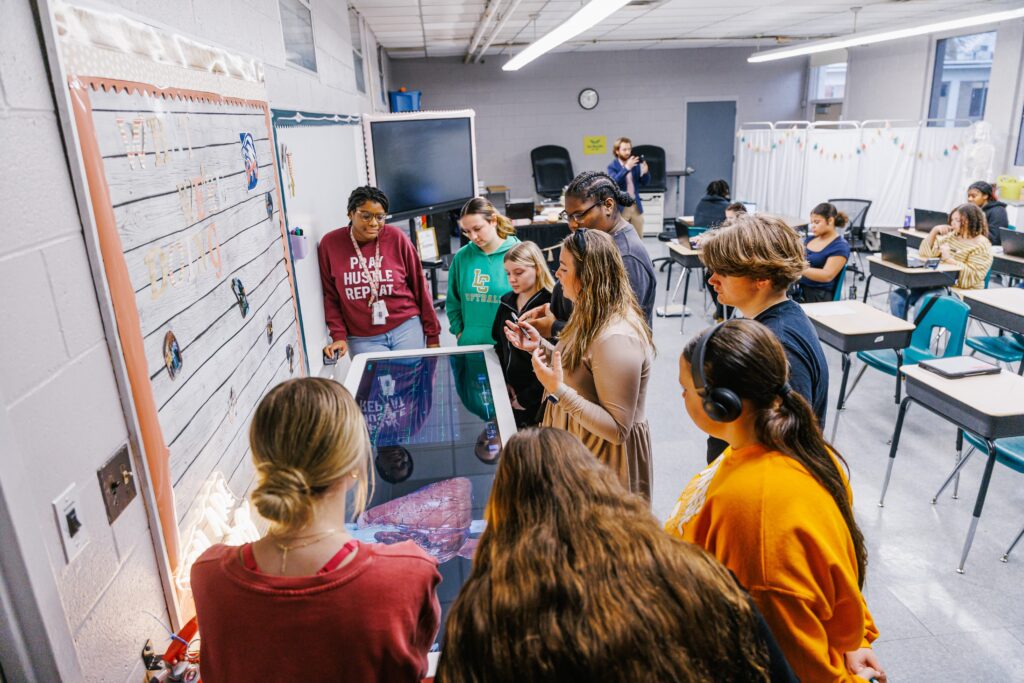
“I would definitely say it gives them a drive to get out into the field,” Lebo said. “They see this on the next level and say, ‘This is what I’m going to see in real life,’ and it makes them want to go to school, want to further their education or want to get out into the working field.”
Truly, it’s an advanced technology system. So much so, in fact, that many colleges and universities across Tennessee don’t have resources as advanced as LCHS.
“My nursing school did not have this technology,” Lebo said, laughing.
NO LONGER ‘FORGOTTEN’
Lake County has, in their own words, developed a bit of an underdog mentality in the past few years, feeling left behind by much of the growth and industry sweeping across Tennessee.
Northwest Tennessee is, objectively, a bit tough to get to. There isn’t a single interstate that runs through the county, and most of the area is served by Tennessee State Road 78.
Nashville, Memphis, Knoxville, Chattanooga and even rural parts of Southwest Tennessee (thanks to BlueOval City) tend to get the headlines.
Furthermore, Lake is one of Tennessee’s 10 distressed counties, indicating it ranks among the bottom 10% of counties most economically distressed across the country. Economic status designations are identified through a composite measure of each county’s three-year average unemployment rate, per capita market income and poverty rate. Based on these indicators, each county is then categorized as distressed, at-risk, transitional, competitive or attainment.
When you rank Tennessee’s counties in terms of how distressed they are, Lake is 95th out of 95 counties.
Before the newly deployed technology, it was difficult for students to enter the healthcare industry on the basis that, at some level, there was little access to the field.
In fact, the nearest hospital is in neighboring Dyer County, nearly 35-45 minutes away for many Lake County residents. That means, for most of the LCHS students interested in healthcare, they have to travel long distances if they want any sort of hands-on experience.
“(LCHS students) feel like they’re not necessarily forgotten about, but they see these things in larger schools, they see this kind of technology, say, 40 minutes to an hour away from their friends that they may talk to,” Regalado said.
Or at least, it was that way until the zSpace and Anatomage technology became available.
“It’s here, right here, in our small school,” Regalado said. “These kids are able to feel like they can compete on the same level as these larger ones.”
That fact is not lost on the students it benefits.
“Normally, smaller counties don’t really get as much,” Harrell said. “But since we’re getting the opportunity to do that, it’s nice.”
AN INVESTMENT FOR A REINVESTMENT
Now, to be clear, Lake County sees a decent number of people roll through, largely in part to the outdoor recreational opportunities at nearby Reelfoot Lake.
“It is beautiful here, lots of people come to visit, but they don’t stay,” Regalado said. “What we want to see is those people stay.”
That’s where the Tennessee Department of Economic and Community Development (TNECD) comes in.
While TNECD is often recognized for major business recruitment and expansion announcements — such as Starbucks’ and In-N-Out’s new East Coast corporate offices or Korea Zinc’s record-breaking $6.6 billion investment — an equally important part of the department’s mission is supporting community and rural development (CRD) across Tennessee, including the department’s announcement this year of historic funding to ensure that the entire state has access to high-speed broadband upon completion of the final infrastructure projects
Broadband is a cornerstone of the CRD division within TNECD. Of the more than $1.7 billion allocated to communities across the state during this administration, more than $1 billion was dedicated to broadband initiatives. These funds can be leveraged by local communities in a variety of ways, including support for digital workforce and training resources like the ones found in Lake County, which received funding through a TNECD Digital Skills, Education and Workforce (DSEW) grant.
DSEW grants vary from county to county. For example, in addition to Lake County’s zSpace and Anatomage technology, Bledsoe County utilized a grant to establish a program centered around drones, agribusiness and fiber optics.
“One of the most crucial aspects of our DSEW grant program is its flexibility and malleability,” TNECD Broadband Director Taylre Beaty said. “We know across the state that one county’s needs might be vastly different than another’s, and it’s critical that we meet each community where their unique situation may be.”
TNECD’s grant programs provide funding across the state to support prosperity and access to resources across all regions and communities and that is now what Lake County has — cutting-edge technology that the next generation of the workforce is utilizing to continuously learn and upskill.
In total, TNECD’s CRD funding has touched all 95 counties across the state and supported a wide range of initiatives, from broadband expansion and site development to historic downtown revitalization, infrastructure planning and other strategic community projects.
“The work we do in our rural communities across the state is crucial for broader growth to occur,” said TNECD Assistant Commissioner of Community and Rural Development Brooxie Carlton. “Before we can announce any sort of project, we have to ensure the infrastructure, workforce and power is in place to do so, and I’m proud that we’ve invested so heavily in those communities.”
The numbers are eye-popping, which, from the department’s perspective, is great. But lost in the shuffle of eye-popping numbers is one crucial fact: The numbers aren’t really just numbers. They represent real people. And Lake County wants to invest in those real people — those real students — so they can come back and invest in Lake County.
“Hopefully, when they get out, they’ll be able to go get their career in these fields and come back and help build these communities up,” Regalado said. “That’s our hope.”
This is a key goal for TNECD. The department hopes investment in local communities spurs necessary growth and, ultimately, leads to better outcomes for all its residents. And when those better outcomes can be generated and reinvested by the students born and raised in those communities, it makes it even more special.
“We’re grateful for the opportunity to support our local communities, but no one knows those areas quite like the people born and raised there,” Carlton said. “When we can help create and support positive lasting impact in those areas, especially when it comes from those born and raised there, it only leads to better outcomes for everyone across our state.”
If nothing else, the technology and the positive impacts it creates give residents in Lake County something to be proud of and, perhaps more importantly, keep students excited about learning.
“If we come in for a lecture day, you have to keep them awake, you have to keep them going,” Lebo said. “But if you tell them we’re having a zSpace or Anatomage Table day, yeah, they’re excited to come to class.”
More information about Tennessee’s broadband programs and the BEAD initiative is available here. Continue to follow TNECD on social media as the department continues its “Road to 100” campaign to highlight real stories from across the state about how broadband and digital literacy are transforming lives, supporting small businesses, strengthening education and powering rural communities forward.